The Parlour Play: Amateur Performance Before the Village Hall
Parlour play amateur performance began in rooms made for daily life. Explore its domestic character and shape a small reading around your own household.
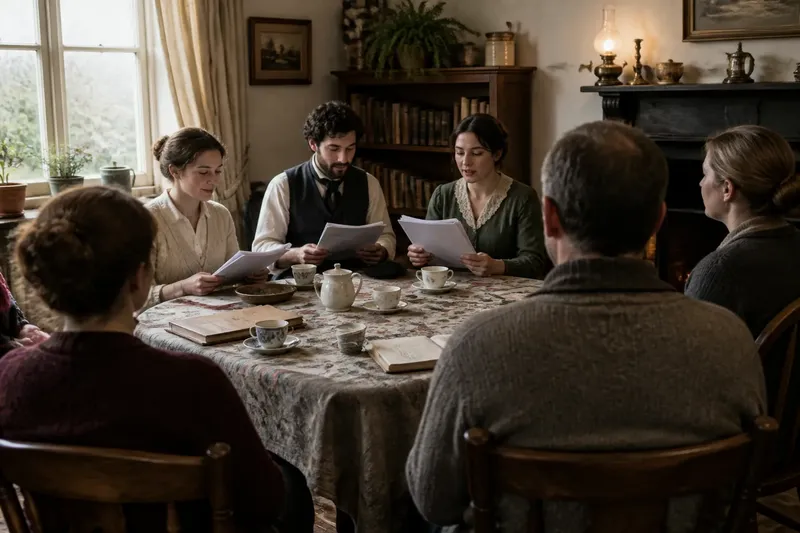
Parlour play amateur performance starts with a room doing two jobs: the dining table still belongs to supper, but a short reading is about to begin beside it. Home performance offers a useful way to think about theatrical play before a village hall: not as a uniform rural tradition with one clear timeline, but as an adaptable domestic arrangement whose details varied by household and place.
A parlour, kitchen, or dining room could become a temporary stage without ceasing to be a home. That overlap shaped the performance. Furniture, entrances, household routines, and relationships all mattered, so a small play often depended more on choosing the right text and sharing attention than on creating an illusion of another place.
What made a parlour play different from a hall performance?
A domestic room was not designed to gather an audience around a stage. A sofa, table, or doorway might already have a purpose, and the people listening could be family, neighbors, or friends invited by the household. The room’s everyday character stayed visible rather than disappearing behind scenery.
That closeness could make a reading feel conversational, but it also put household customs in the foreground. The host had to decide when visitors should settle, which room could be used, and how much disruption was acceptable. These particulars varied; “parlour play” is a handy description, not evidence that every rural community shared the same custom.
It helps to distinguish a reading from a fully acted scene. Readers can hold scripts and stay near one another; a staged scene needs agreed entrances, movement, and perhaps a few props. Either form can suit a home, but the choice changes how the room is used.
How did household rooms shape the performance?
Domestic furniture could become part of the scene or remain an obstacle. A chair might suggest a character’s place, while a long table could separate readers from listeners. Instead of adding scenery, performers could use a doorway, a pause, or a change in position to signal a shift.
Sound and routine mattered, too. A kitchen in use, conversation from another room, or a reader looking down at a page could make words hard to follow. A host could choose a quieter moment, ask readers to face the group, and keep the action short enough to hold attention without turning the room into a formal theater.
Imagine a household with a dining table between three readers and a few invited neighbors. The host first keeps the table as a setting for the scene, then moves the readers to its short end and asks them to speak toward the group. The resulting arrangement preserves the table as part of the room while giving the words a clear direction; if listeners still cannot follow, the host can switch to a seated reading with readers taking turns nearer the group.
How can you shape a small reading for a home?
Start with the people and the text, not a plan to imitate a theater. A script with a small cast, one setting, and clear speaking turns asks less of a domestic room than a piece with frequent entrances or complicated changes. A short excerpt can also make a gathering feel complete without requiring elaborate rehearsal.
- Check whether the script has more speaking roles than available readers; if it does, choose a shorter scene or combine suitable parts, and otherwise keep the full cast.
- Check whether the scene changes setting; if it does, select one self-contained section or explain the shifts aloud, and otherwise read the scene as written.
- Check whether entrances depend on a clear doorway; if the route is blocked, remove the entrance or use a seated cue, and otherwise keep the movement.
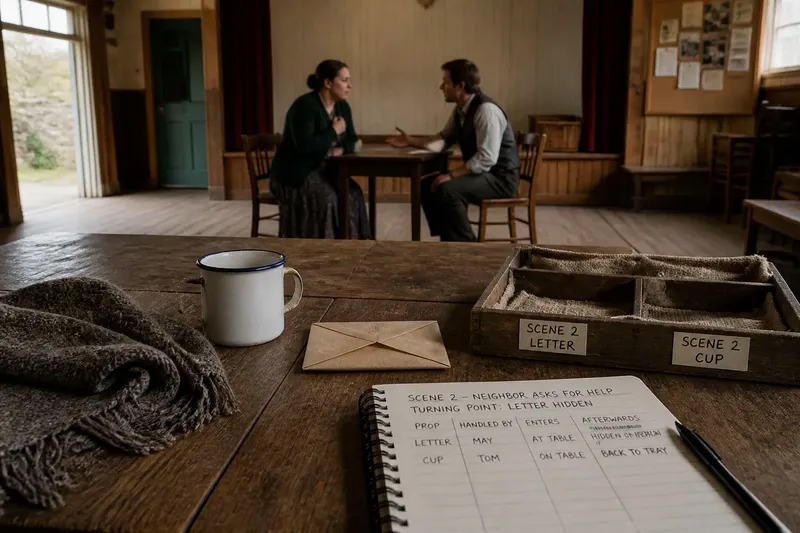
- Check whether a prop is essential to understanding the action; if it is, use an ordinary household object that serves the purpose, and otherwise leave extra props out.
- Check whether readers can keep their place in the script; if pages or turns are confusing, mark speaker names and entrances, and otherwise use clean copies without added notes.
- Check whether the household needs the room during the reading; if it does, choose another time or a different room, and otherwise agree on a clear start and finish.
For example, imagine a household has four willing readers, one shared room, and a script with several locations and a large cast. The host chooses a single conversation scene with four speaking parts, marks each entrance in the copies, and leaves a kitchen chair in place as the only prop. The result is a reading that fits the available people and room; the tradeoff is that the larger story’s other characters and settings are left out.
What choices help with common parlour-play snags?
What if a reader loses a line?
Keep the script open to the current passage and agree that another reader can offer the next cue quietly. If the group prefers not to interrupt, pause and return to the last clear line rather than improvising a new scene.
What if the play needs more movement than the room allows?
Choose a passage that works seated or use one simple change of position to mark a transition. If movement is central to the scene, a different text may suit the household better.
What if conversation continues after the reading begins?
Have the host introduce the piece and say when discussion can resume. If household activity is likely to interrupt, choose a quieter time or a room less involved in daily tasks.
What if the script feels too difficult for the group?
Read a short passage aloud before committing to it and listen for unfamiliar names, long speeches, or confusing turns. If the language keeps the group from following the action, pick a clearer scene or share a brief explanation before reading.
Why does parlour play amateur performance still suit a seasonal gathering?
The form can make use of a room and a group already at hand, while leaving the household’s character intact. A winter reading might fit into an evening indoors; in a brighter season, an open window or garden door can become part of the setting. Neither season dictates the script, and neither turns one household’s choice into a rule for others.
For a present-day gathering, decide whether the event is a reading, a lightly staged scene, or a more rehearsed performance. That decision guides the preparation: readers need clear copies and agreed turns, while an acted scene needs simple entrances and enough room to move. Keep furnishings that help the scene, and avoid adding scenery merely to make the room look theatrical.
Before guests leave, return any moved furniture to its household use and put scripts and props away. A home performance works best when the occasion fits the room without claiming it permanently; the next story can begin in another corner, or in the same one when daily life allows.