A Midsummer Story Walk with One Stopping Place
Plan a midsummer story walk around one stopping place, matching the route and tale so guests arrive ready to listen and the countryside shapes the gathering.
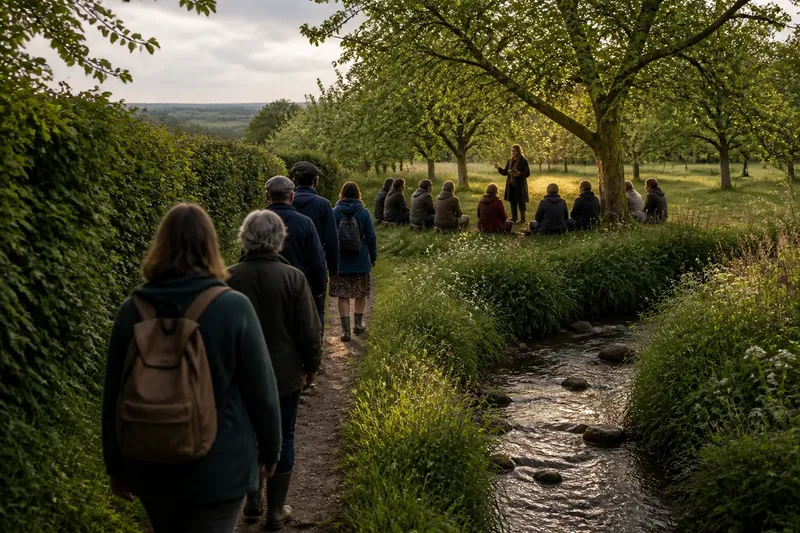
A midsummer story walk works best when the path leads to one place where everyone can settle and listen. For a midsummer story walk, choose the destination before the tale: an orchard edge, a bend in a farm track, or a gate with a broad view can give the gathering its natural shape. The walk becomes an unhurried approach, not a string of performances.
That single pause keeps the occasion simple to host while giving the route a role of its own. The group leaves a familiar starting point, passes a few distinct features, then arrives somewhere that invites a story. Let the path build anticipation; save the performance for the place where the group can stay.
What should the stopping place offer?
Choose a spot where the group can gather without blocking a path, crowding livestock, or disturbing a home. Look for room to stand or sit, a clear place for the storyteller, and a feature that can become part of the tale: tree branches, a stream, distant roofs, or open sky.
Give the route a simple shape. A hedgerow that briefly closes the view, the sound of water around a bend, or a field opening suddenly onto the evening sky can make the destination feel earned. These are changes to notice while walking, not cues for extra performances. Keep the pause close enough for an unhurried stroll rather than a hike with a story attached.
Walk the route under conditions like those expected for the gathering, and note where guests can wait if the ground is damp. Ask permission to use private land, avoid sensitive crops and habitats, and consider whether the route works for guests with differing mobility. Confirm access and local requirements with the landowner or relevant local authority where needed.
How do three story approaches fit different routes?
Choose the approach by asking what the journey contributes. A landscape-linked tale makes a visible feature feel charged with meaning; a familiar story lets the route and setting take the lead; an original tale can turn one ordinary detail into a private emblem for the gathering.
When should the story answer the landscape?
Choose a tale that seems to belong to what guests can see: a lost traveler for a winding lane, for instance, or a midsummer transformation beneath old trees. This fits a route with a strong visual character and listeners who enjoy connecting words to their surroundings. Keep the link suggestive, so the landscape sets the mood without having to illustrate every scene.
When is a familiar tale the better fit?
A well-known folktale or a story shared in the community gives newcomers an easy point of entry. It works well for mixed-age groups and routes where the walk itself is part of the pleasure. A familiar plot leaves listeners free to notice the evening air, birdsong, or view instead of concentrating on unfamiliar names and twists.
When can an original tale make the place feel personal?
A brief, newly written story can draw on route details without claiming local history it cannot support. This suits a small gathering with a host who enjoys shaping words and can keep the piece clear when spoken aloud. Let one image carry the tale—a lantern in a window, a fox track in soft earth, or a moonlit gate—rather than loading it with scenery.
How can the route prepare listeners for the story?
Give the walk a small sequence of things to notice, then let the destination gather them into one image. The first landmark might be a view that disappears behind a hedge; the next could be the sound of a stream; the final turn might reveal the tree or field where the tale begins. These details make movement part of the storytelling without asking anyone to stop and watch another scene.
Tell guests at the starting point that there is one story stop, and name the destination in a way they can recognize. At the pause, let everyone find a place before the storyteller begins. If the tale refers to a visible feature, point toward it once and then let the words carry attention; the audience need not keep turning between speaker and scenery.
Say you are hosting a small gathering whose route passes a hedgerow, a stream, and an orchard edge. You choose the orchard as the sole stopping place and a short tale about a traveler following a distant light. At the start, you tell guests to notice where the path hides and then opens the view; along the way, they pass the hedge and stream without stopping. At the orchard, everyone settles beneath the trees before the first line. The route has supplied a sense of arrival, while the single pause gives listeners a stable place to follow the tale.
What do readers often ask about a story walk?
How long should a midsummer story walk feel?
Make the walk short enough that the group arrives with attention left for the story. The route should feel like an approach to the destination, not a separate excursion competing with it.
Should the group stop at landmarks along the way?
Usually, keep landmarks as passing details rather than additional performance stations. If a feature calls for a long explanation or a separate scene, choose whether it belongs in the walk or the destination instead of asking guests to split their attention.
What if the route is muddy or difficult for some guests?
Choose a firmer, more accessible route or move the story stop closer to the starting point. If no suitable route is available, use a sheltered alternative and tell guests about the change before they set out.
How can the story feel connected to local history?
Use verified local details only when you can confirm them with a reliable local source or knowledgeable community member. Otherwise, present the tale as fiction and let the landscape inspire it without implying that invented events really happened.
What should you prepare before inviting people?
- Route and footing: Walk the planned path and note muddy, narrow, or uneven sections. If the route is difficult for your guests, choose a firmer alternative or move the destination closer.
- Permission: Confirm that the route and stopping place are available for the gathering. If permission is unclear, ask the landowner or choose another location.
- Arrival point: Identify a recognizable starting place and a destination everyone can find. If either is hard to describe, choose clearer landmarks and send guests those directions.
- Group space: Check that guests can gather without obstructing others or pressing into crops and habitats. If the space is tight, reduce the group or move the stop.
- Story and route: Read the tale aloud and compare its images with the features guests will pass. If it needs several separate scenes to make sense, choose a simpler tale or keep those scenes for the destination.
- Weather alternative: Decide whether damp conditions call for shelter, a shorter route, or postponement. If the original plan would make walking or listening uncomfortable, tell guests about the alternative before they leave home.
- Beginning cue: Choose one visible signal that everyone has arrived and the story is starting, such as the host turning from the path to face the seated group. If guests might miss it, explain the cue at the starting point.
The best midsummer story walk gives the route one clear job: lead the group toward a place worth staying in. Match the tale to what guests will pass and what they will see at the destination, then keep the performance there. That simple route-and-destination method makes the countryside part of the experience without turning every bend into a stage.